Building Pad Construction in Palm Beach County, Florida
Professional building pad construction and site preparation throughout Palm Beach County and surrounding South Florida areas. Thum Co. Contractors excavates, fills, compacts, and grades building pads that provide stable foundations for residential and commercial construction while managing stormwater and meeting local elevation requirements.
Our building pad team serves West Palm Beach, Lake Worth, Boynton Beach, and surrounding areas. We work from civil engineering plans to construct building pads that support structures safely in South Florida’s challenging soil and water table conditions.
Call (561) 366-2050 for a free building pad construction estimate in Palm Beach County.
What Is a Building Pad?
A building pad is the prepared, compacted surface that supports building foundations and structures. Building pad construction involves excavating unsuitable soils, placing and compacting engineered fill material, grading to proper elevations and slopes, and creating stable ground conditions that won’t settle under structural loads.
In South Florida, building pads are critical because:
- Native soils often won’t support structural loads
- High water tables require elevating buildings
- Flood zones mandate minimum finished floor elevations
- Organic soils (muck) must be removed
- Proper drainage requires specific grades and slopes
Building pads essentially create artificial high ground where structures can be built safely throughout Palm Beach County.
Building Pad Construction Process
Site Assessment and Planning
We review civil engineering plans, identify existing grade elevations, determine cut and fill quantities, locate unsuitable soils requiring removal, and plan equipment access and material staging.
Proper planning prevents delays and ensures efficient pad construction throughout South Florida.
Clearing and Demolition
We remove vegetation, clear trees and brush, demolish existing structures if present, and strip topsoil from areas where pads will be built. Organic topsoil can’t support structures and gets removed before fill placement.
This work often coordinates with our demolition services when existing structures require removal.
De-Mucking (Unsuitable Soil Removal)
South Florida’s low-lying areas often contain organic soils (muck) that compress under load and won’t support structures. De-mucking excavates these unsuitable soils down to stable material.
We excavate muck to depths specified by engineers (sometimes 2-6+ feet), haul it off-site, and replace it with engineered fill. This prevents long-term settlement throughout Palm Beach County building pads.
Fill Material Placement
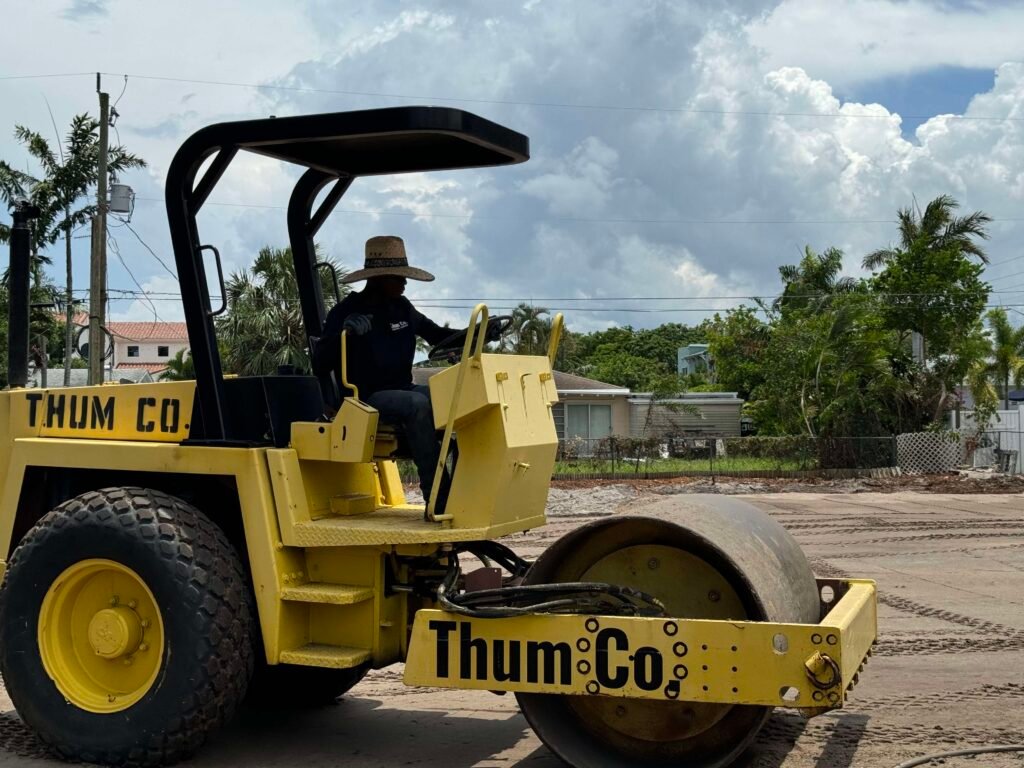
We import structural fill material meeting engineering specifications, place fill in controlled lifts (typically 8-12 inch layers), spread each lift evenly across pad areas, and prepare for compaction.
Fill material must meet specifications for gradation, plasticity, and other properties ensuring it compacts properly and provides stable support.
Compaction
Each fill lift gets compacted using appropriate equipment—vibratory rollers, plate compactors, or sheepsfoot rollers depending on material and lift thickness. Proper compaction is critical—it prevents future settlement that would damage structures.
Engineers typically specify 95% standard Proctor density or similar compaction requirements. Some projects require testing to verify compaction meets specifications.
Grading to Final Elevations
We grade building pads to elevations specified on civil engineering plans, establish proper drainage slopes (typically minimum 2% away from building areas), create swales or drainage routes for stormwater management, and prepare surfaces for foundation construction.
Laser-guided grading equipment ensures accurate elevations throughout Palm Beach County projects.
Final Inspection and Documentation
Building departments or engineers may inspect completed pads before foundation work begins. We provide compaction test results when required and document pad construction for permit compliance.
Building Pad Design Considerations
Elevation Requirements
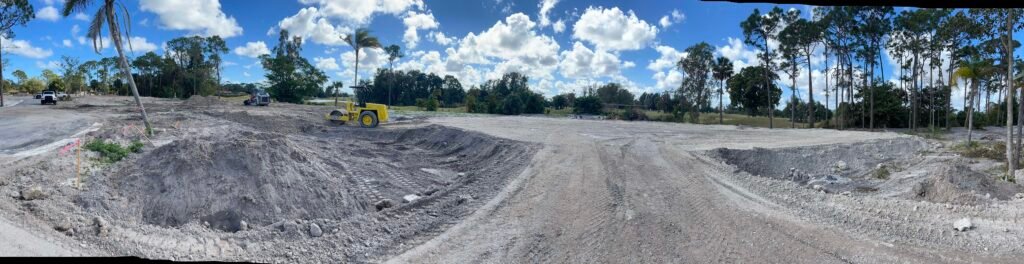
Palm Beach County regulations and flood zone requirements establish minimum finished floor elevations for buildings. Building pads must raise structures to meet these requirements.
We construct pads to elevations ensuring foundations and buildings meet all elevation requirements throughout South Florida.
Drainage and Stormwater Management
Building pads must shed water properly, directing runoff to drainage systems rather than allowing ponding near structures. Pad grading coordinates with storm drainage installation for complete stormwater management.
Engineers design pad slopes and drainage routes ensuring proper water management throughout Palm Beach County sites.
Soil Bearing Capacity
Building pads must provide adequate bearing capacity for foundation loads. This requires removing unsuitable soils and properly compacting structural fill to density levels supporting expected loads.
We follow engineering specifications ensuring pads provide required bearing capacity for structures.
Settlement Prevention
Proper compaction prevents settlement that would crack foundations and damage structures. We compact fill to specified densities, place material in appropriate lift thicknesses, and verify compaction through testing when required.
This prevents the settlement problems that occur with improperly constructed pads throughout South Florida.
Types of Building Pads We Construct
Residential Building Pads
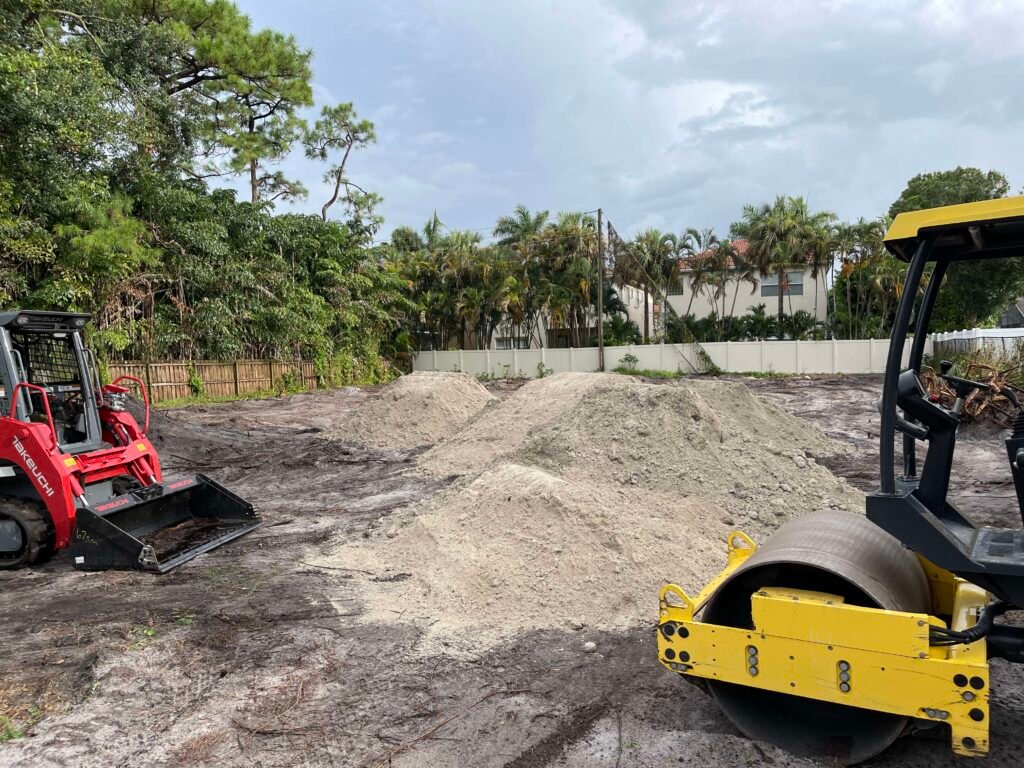
Single-family home sites requiring pad construction to achieve proper elevations, manage drainage, or provide stable building surfaces. Residential pads range from small lots to large estate home sites throughout Palm Beach County.
We construct residential pads meeting local building codes and HOA requirements.
Commercial Building Pads
Larger pads for commercial buildings, warehouses, retail centers, and office complexes. Commercial pads often involve significant fill quantities, extensive grading, and coordination with site utilities and infrastructure.
We handle commercial pad construction throughout South Florida working with general contractors and developers.
Multi-Building Development Pads
Subdivisions and developments requiring multiple building pads coordinated with roads, utilities, and drainage infrastructure. We grade entire developments creating individual building pads at proper elevations.
Specialty Pads
Custom applications including equipment pads, generator pads, transformer pads, and other specialized elevated surfaces requiring stable compacted bases.
Fill Materials and Specifications
Structural Fill: Clean sand, sandy soil, or approved fill materials meeting engineering specifications. Material must compact properly and provide stable support.
Select Fill: Higher-quality fill materials used where specifications require specific properties—low plasticity, high bearing capacity, or particular gradation.
Limerock: Crushed limestone base material sometimes specified for upper pad layers or as transition layers between different fill types.
Unsuitable Materials: Organic soils, high-plasticity clays, construction debris, and materials containing vegetation don’t meet specifications and can’t be used for building pad construction.
We source appropriate materials meeting engineering specifications throughout Palm Beach County.
Equipment for Building Pad Construction
Excavators: Remove unsuitable soils, excavate to design elevations, and place fill materials.
Bulldozers: Spread fill materials, rough grade pad surfaces, and move material across sites.
Motor Graders: Fine grade pads to precise elevations and slopes, particularly important for larger commercial pads.
Compaction Equipment: Vibratory rollers, plate compactors, and specialized equipment compact fill to specified densities.
Laser Grading Systems: GPS and laser-guided equipment ensures accurate elevations meeting engineering specifications.
We own equipment appropriate for efficient building pad construction throughout South Florida.
Coordination with Foundation Construction
Building pad completion must coordinate with foundation construction timing. Pads need time to stabilize before foundation work begins, inspections must be complete, and elevations must be verified.
We coordinate pad and foundation work ensuring smooth project progression throughout Palm Beach County.
Testing and Quality Control
Compaction Testing: Engineers or testing agencies perform field density tests verifying fill compaction meets specifications. Tests occur at specified intervals during pad construction.
Elevation Verification: Surveying confirms finished pad elevations match engineering plans.
Material Testing: Fill materials may be tested verifying they meet engineering specifications before placement.
Bearing Capacity Testing: Some projects require plate load tests or other methods verifying bearing capacity.
We coordinate all required testing throughout building pad construction in South Florida.
Common Building Pad Problems We Prevent
Inadequate Compaction: Following proper lift thicknesses and compaction procedures prevents settlement.
Using Unsuitable Fill: Sourcing approved materials prevents problems from using unsuitable soils.
Incomplete De-Mucking: Thoroughly removing organic soils prevents settlement from remaining muck.
Poor Drainage: Proper grading prevents water accumulation damaging pads or structures.
Incorrect Elevations: Careful surveying ensures pads meet required elevations throughout Palm Beach County.
Frequently Asked Questions
How much does building pad construction cost? Costs vary based on pad size, fill quantity required, de-mucking depth, and site conditions. Residential pads typically range $5,000-$25,000. Large commercial pads require detailed estimates. Contact us at (561) 366-2050 for a quote based on your plans.
How long does building pad construction take? Small residential pads typically take 3-7 days. Larger pads or extensive de-mucking may take 2-3 weeks. Timeline depends on pad size, fill quantity, weather, and compaction requirements.
What is de-mucking? De-mucking removes organic soils (muck) that won’t support structures. We excavate unsuitable material and replace it with engineered fill, preventing settlement throughout Palm Beach County.
Do I need an engineer for building pad construction? Yes, building pads should be designed by civil engineers who specify elevations, fill requirements, compaction standards, and drainage provisions meeting local requirements.
How high should building pads be? Elevation requirements vary by location, flood zones, and local codes. Engineers design pads meeting minimum elevation requirements for specific sites throughout South Florida.
Can you build pads in wet areas? Yes, we construct pads in areas with high water tables using dewatering when necessary, proper fill materials, and construction methods appropriate for wet conditions common in Palm Beach County.
What happens if fill settles after construction? Properly compacted fill using approved materials shouldn’t settle significantly. We compact to specified densities preventing settlement problems throughout South Florida.
Do building pads need permits? Pad construction as part of building projects falls under building permits. Stand-alone grading may require grading permits. We coordinate permitting for projects throughout Palm Beach County.
Related Services
Building pad construction often involves additional work:
- Excavation & Site Work – Complete site preparation
- Foundation Construction – Concrete foundations
- Storm Drain Installation – Site drainage
Get Your Building Pad Construction Estimate
Ready to construct building pads in Palm Beach County? Contact Thum Co. Contractors for professional building pad construction from your engineered plans.
Call (561) 366-2050 for building pad construction.
Thum Co. Contractors 468 Tall Pines Rd. West Palm Beach, FL 33415
Licensed building contractors providing building pad construction throughout Palm Beach County and surrounding South Florida areas since 2017.