Trenching Services in Palm Beach County, Florida
Professional trenching and underground excavation services throughout Palm Beach County and surrounding South Florida areas. Thum Co. Contractors digs trenches for utilities, drainage systems, water lines, sewer connections, electrical conduits, and underground infrastructure using excavators, trenchers, and specialized equipment.
Our trenching team serves West Palm Beach, Lake Worth, Boynton Beach, and surrounding areas. We excavate trenches to proper depths and specifications, coordinate with utility contractors, and backfill properly ensuring long-term stability.
Call (561) 366-2050 for a free trenching estimate in Palm Beach County.
Types of Trenching We Provide
Utility Trenching
Excavation for underground utilities including water lines, sewer systems, electrical conduits, gas lines, communication cables, and fiber optic installations. Utility trenching requires proper depth, width, slope, and bedding for each utility type.
We dig utility trenches throughout Palm Beach County for new construction, service connections, utility extensions, and infrastructure upgrades.
Drainage Trenching
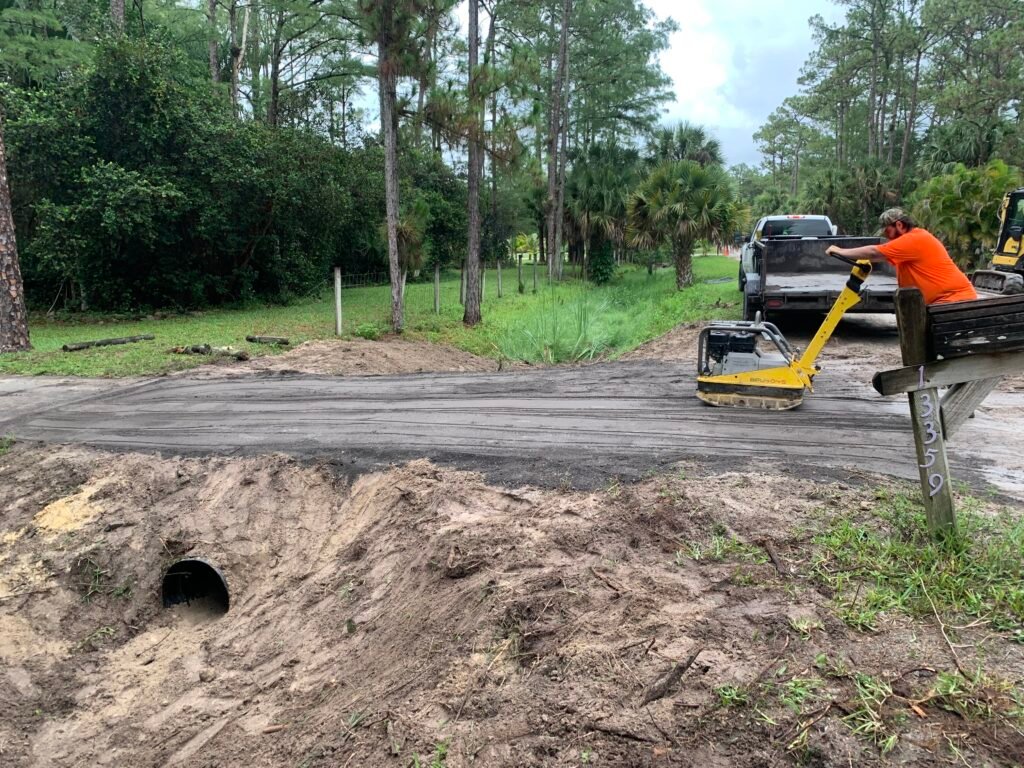
Trenches for storm drainage pipes, French drains, exfiltration systems, and other drainage infrastructure. Drainage trenches require proper slope (minimum 1% typically) ensuring gravity flow.
We coordinate drainage trenching with complete stormwater systems throughout South Florida properties.
Water Line Trenching
Excavation for water service lines, irrigation mains, fire protection systems, and water distribution. Water line trenches protect pipes from damage while providing access for future maintenance.
We dig water line trenches from main connections to buildings, across properties, and for complete water distribution systems in Palm Beach County.
Sewer and Septic Trenching
Trenches for sewer connections, septic system installations, drain fields, and wastewater infrastructure. Sewer trenching requires precise slopes ensuring proper flow and preventing backups.
We excavate sewer trenches coordinating with plumbing contractors and septic installers throughout South Florida.
Electrical and Communication Trenching
Conduit trenches for electrical service, underground power distribution, communication cables, fiber optics, and security systems. Electrical trenching requires proper depth meeting code requirements and separation from other utilities.
We provide trenching for electrical contractors and communication installers throughout Palm Beach County.
Irrigation Trenching
Shallow trenches for irrigation systems, sprinkler lines, and landscape watering infrastructure. Irrigation trenching minimizes landscape disruption while providing proper pipe installation depth.
Gas Line Trenching
Excavation for natural gas or propane lines requiring careful depth control and protection. Gas trenching coordinates with utility companies and follows strict safety protocols.
Trenching Methods and Equipment
Excavator Trenching
Using excavators with trenching buckets for most utility and drainage trenches. Excavators provide precise depth control, work in varied soil conditions, and handle different trench widths throughout Palm Beach County.
Excavator trenching works for residential service trenches to large commercial utility corridors.
Walk-Behind Trenchers
Compact trenching machines for irrigation, small utilities, or tight access areas. Trenchers cut narrow trenches efficiently in accessible locations with suitable soil conditions.
We use trenchers when appropriate for faster narrow trench excavation throughout South Florida.
Hand Excavation
Manual digging near existing utilities, in extremely tight access areas, or where mechanical equipment risks damage. Hand excavation is slower but essential in sensitive locations throughout Palm Beach County.
Directional Boring
For some applications, directional boring avoids open trenching—drilling underground paths and pulling utilities through without surface excavation. While we don’t perform boring ourselves, we coordinate with boring contractors when appropriate.
The Trenching Process
1. Utility Location and Marking
Before any excavation, we call Florida 811 (Sunshine State One Call) requesting utility locations. All underground utilities get marked—electric, gas, water, sewer, communication, cable.
Working without proper utility marking creates serious safety and liability risks throughout Palm Beach County.
2. Trench Layout
We stake trench routes following plans or designed paths, verify clearances from structures and utilities, and plan equipment access and material staging.
3. Excavation
Using appropriate equipment, we dig trenches to specified depths and widths, maintain proper slopes for drainage applications, shore trenches when required for safety, and manage excavated material.
4. Utility Installation
Utility contractors install pipes, conduits, or cables in prepared trenches. We coordinate timing ensuring trenches are ready when installers arrive.
5. Bedding and Backfill
We place bedding material (sand or fine material) around utilities per specifications, backfill trenches in controlled lifts, compact each layer preventing future settling, and protect utilities during backfill.
6. Surface Restoration
We restore surfaces to pre-trenching conditions—regrading lawn areas for sod, replacing pavement sections, restoring landscaping, and leaving properties clean throughout South Florida.
Trench Specifications
Water Line Trenches
Typical depth: 24-36 inches Width: 12-18 inches minimum Bedding: Sand or fine material around pipes Slope: Not critical for pressurized water lines
Sewer and Drain Trenches
Typical depth: 24-48 inches (varies with connection points) Width: 12-24 inches depending on pipe size Bedding: Sand or gravel per specifications Slope: Minimum 1% (⅛ inch per foot) for gravity flow
Electrical Conduit Trenches
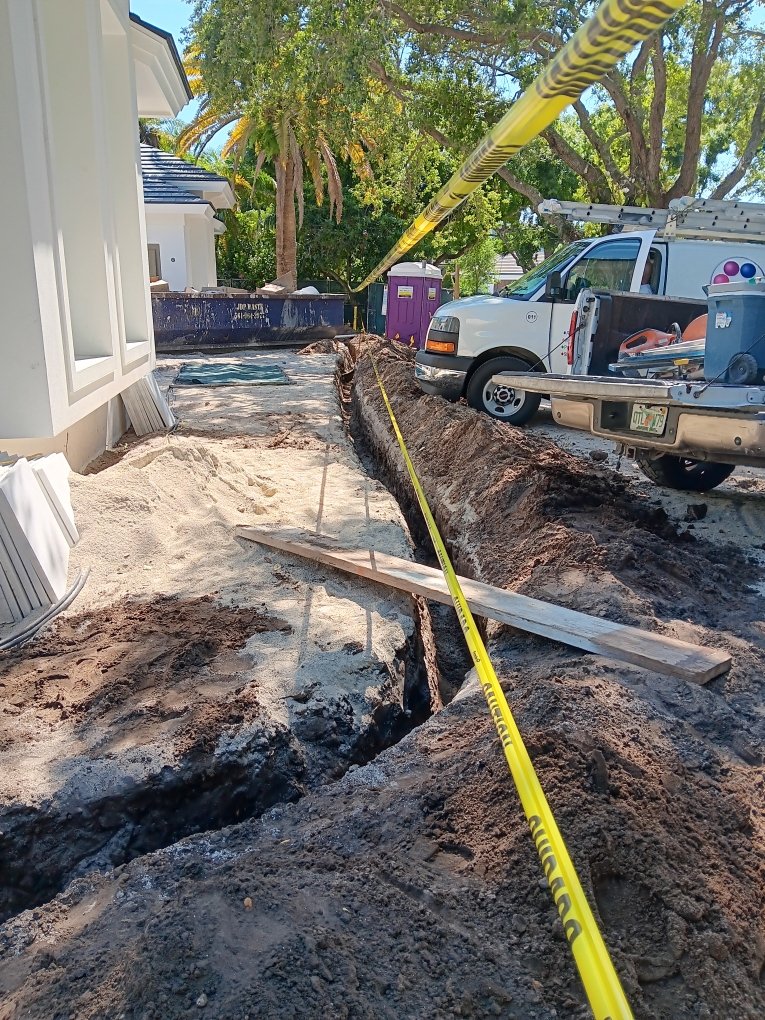
Typical depth: 18-24 inches (residential), deeper for commercial Width: 8-12 inches for single conduit Bedding: Sand or fine backfill protecting conduits Slope: Not required
Storm Drainage Trenches
Typical depth: 24-60 inches depending on system design Width: 18-36 inches based on pipe size Bedding: Gravel or specified material Slope: Minimum 1% for drainage flow
Specific requirements vary based on engineering specifications and local codes throughout Palm Beach County.
Backfill and Compaction
Proper backfill prevents future trench settling that creates surface depressions:
Lift Placement: We place backfill in 8-12 inch layers (lifts) rather than dumping entire trench depth at once.
Compaction: Each lift gets compacted using appropriate equipment before adding the next layer.
Material Selection: We use suitable backfill—clean fill free of rocks, debris, or organic material that would prevent proper compaction.
Testing: Some projects require compaction testing verifying density meets specifications.
Proper backfill technique prevents the sunken trenches and surface failures common throughout South Florida when trenches aren’t backfilled correctly.
Trench Safety
Trenching creates serious safety hazards. We implement safety measures:
Sloping or Shoring: Trenches over 5 feet deep require sloping sides or shoring (protective systems) preventing cave-ins.
Atmospheric Testing: Deep trenches may need atmospheric testing for dangerous gases.
Access and Egress: Safe entry and exit points for workers in trenches.
Equipment Safety: Proper equipment operation and site protection throughout Palm Beach County projects.
We follow OSHA regulations and maintain safe work practices on all trenching projects.
Coordination with Utility Installation
Trenching timing coordinates with utility contractors:
Plumbers: Water and sewer line installation timing.
Electricians: Conduit installation and wire pulling.
Irrigation Contractors: Sprinkler system pipe installation.
Communication Installers: Cable and fiber optic installation.
We coordinate schedules ensuring trenches are ready when installers need them throughout South Florida.
Challenges in South Florida Trenching
High Water Table: Trenches may fill with groundwater requiring dewatering during installation.
Sandy Soils: Loose sandy soils cave easily requiring wider trenches or shoring.
Rock and Limestone: Hitting limestone rock requires different equipment or techniques.
Existing Utilities: Properties throughout Palm Beach County have numerous underground utilities requiring careful excavation.
Wet Season: Heavy rainfall complicates trenching during summer months in South Florida.
We handle these challenges with appropriate equipment and techniques throughout Palm Beach County.
Permits and Regulations
Trenching requirements vary by scope and location:
Utility Connection Permits: Water, sewer, and other utility connections require permits.
Right-of-Way Permits: Work in public rights-of-way needs municipal approval.
Building Permits: Trenching as part of construction falls under building permits.
Utility Location: Florida law requires calling 811 before excavation.
We coordinate permitting and comply with regulations throughout South Florida.
Applications and Projects
New Construction: All utility trenching for new buildings throughout Palm Beach County.
Service Connections: Connecting properties to water, sewer, electric, and other utilities.
Drainage Improvements: Installing or upgrading drainage systems.
Irrigation Systems: Trenching for landscape irrigation installation.
Utility Repairs: Accessing and repairing damaged underground utilities.
Infrastructure Upgrades: Replacing or upgrading aging utility systems.
Frequently Asked Questions
How much does trenching cost? Trenching costs vary based on trench length, depth, soil conditions, and access. Simple residential utility trenching typically ranges $8-$20 per linear foot. Complex conditions or deeper trenches cost more. Contact us at (561) 366-2050 for a specific quote.
How deep are utility trenches? Depth varies by utility type and code requirements. Water lines typically 24-36 inches, electrical 18-24 inches, sewer 24-48+ inches. We trench to specifications for each utility throughout Palm Beach County.
How long does trenching take? Small residential trenches (50-100 feet) typically take 1 day. Larger projects may take several days. Timeline depends on trench length, depth, soil conditions, and backfill requirements.
Do you call for utility locations? Yes, we call Florida 811 before all excavation projects. This is required by law and prevents damage to underground utilities throughout South Florida.
What happens if you hit a utility? If marked utilities are hit despite proper care, we stop work immediately, notify the utility owner, and coordinate repairs. Proper utility location before excavation prevents most utility strikes.
Can you trench in wet areas? Yes, we work in areas with high water tables using dewatering when necessary, adjusting techniques for wet conditions, and timing work when practical during drier periods.
How do you prevent trench settling? Proper backfill in controlled lifts with compaction of each layer prevents settling. We follow specifications ensuring trenches don’t create future surface depressions throughout Palm Beach County.
Do you restore surfaces after trenching? Yes, we restore all disturbed areas—regrading for sod in lawn areas, replacing pavement sections, restoring landscaping, and cleaning up completely.
Related Services
Trenching often involves additional work:
- Excavation & Site Work – Complete site preparation
- Storm Drain Installation – Drainage systems
- French Drain Installation – Drainage trenching
Get Your Trenching Estimate
Ready for trenching services in Palm Beach County? Contact Thum Co. Contractors for professional utility and drainage trenching.
Call (561) 366-2050 for trenching services.
Thum Co. Contractors 468 Tall Pines Rd. West Palm Beach, FL 33415
Licensed building contractors providing trenching services throughout Palm Beach County and surrounding South Florida areas since 2017.