Exfiltration Trench Installation in Palm Beach County, Florida
Professional exfiltration trench and exfiltration system installation throughout Palm Beach County and surrounding South Florida areas. Thum Co. Contractors installs underground stormwater management systems that temporarily store and gradually infiltrate runoff into the ground, managing drainage in areas where conventional storm systems aren’t available or practical.
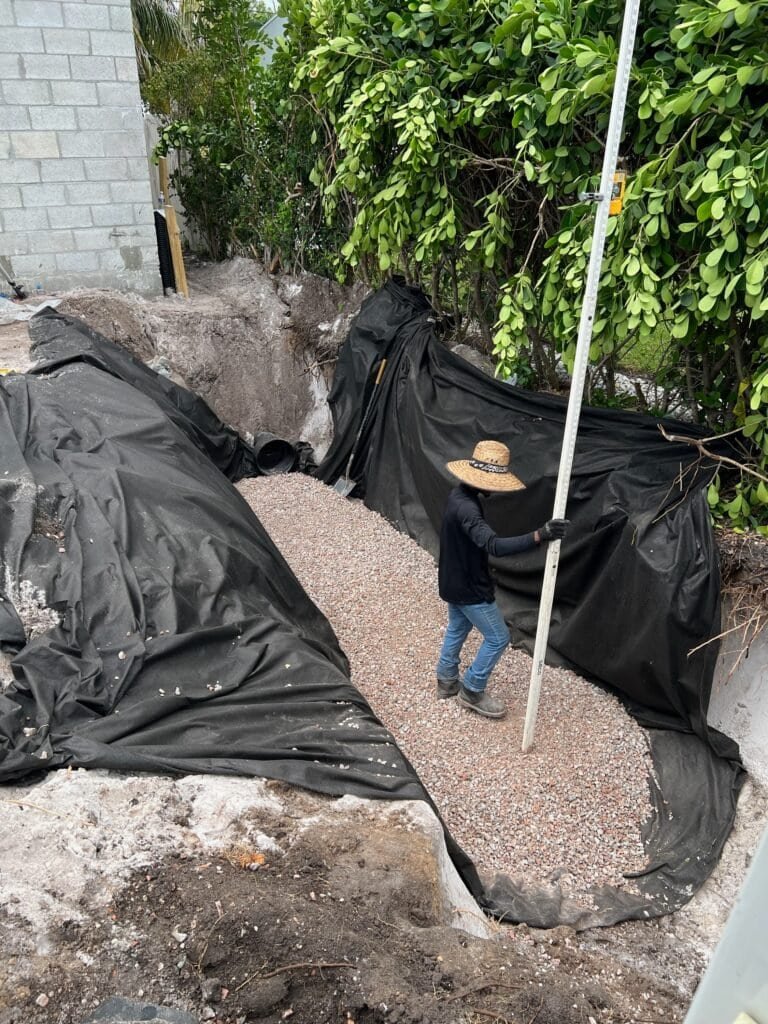
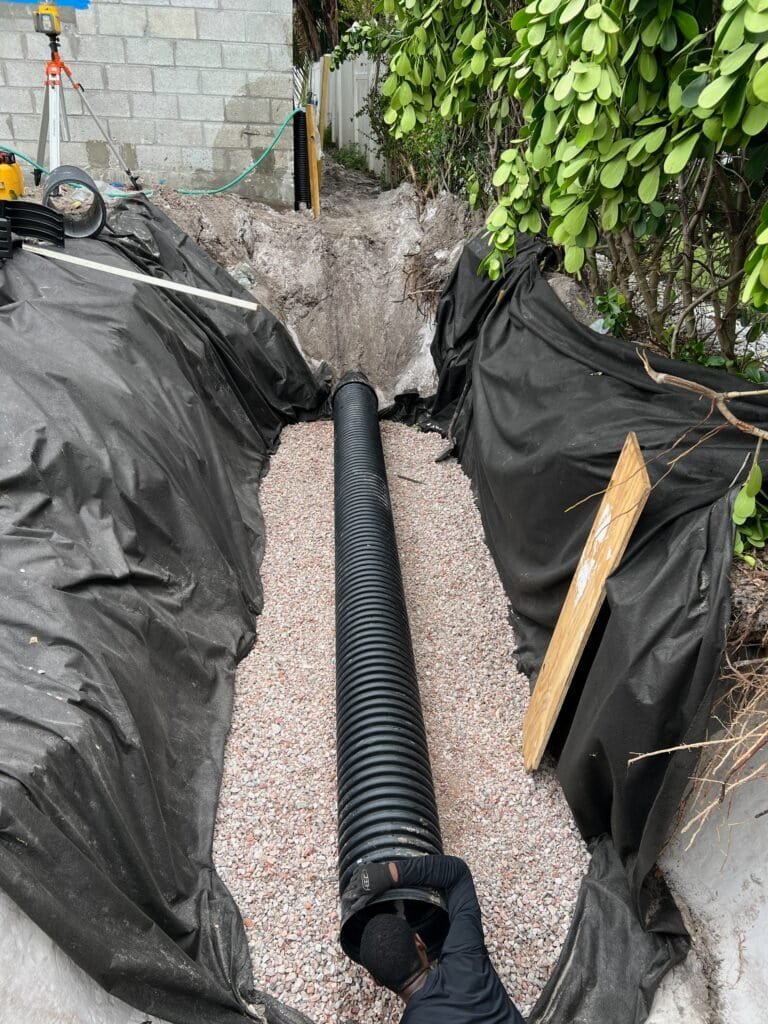
Our exfiltration installation team serves West Palm Beach, Lake Worth, Boynton Beach, and surrounding areas. We work from engineered plans to install exfiltration systems that meet South Florida Water Management District requirements and local stormwater regulations.
Call (561) 366-2050 for a free exfiltration system estimate in Palm Beach County.
What Are Exfiltration Trenches?
Exfiltration trenches are underground stormwater management systems consisting of perforated pipe surrounded by clean stone, installed in excavated trenches. Unlike French drains that primarily manage groundwater, exfiltration trenches handle surface stormwater runoff—temporarily storing water in the stone-filled trench and allowing it to gradually infiltrate (exfiltrate) into surrounding soil.
These systems are essential in South Florida where:
- High water tables limit underground drainage options
- Rapid stormwater infiltration is required
- Development increases impervious surfaces
- Conventional storm drain connections aren’t available
- On-site stormwater management is mandated
Palm Beach County regulations often require on-site stormwater retention and infiltration for new construction and development. Exfiltration trenches provide this capacity while minimizing above-ground impact.
How Exfiltration Systems Work
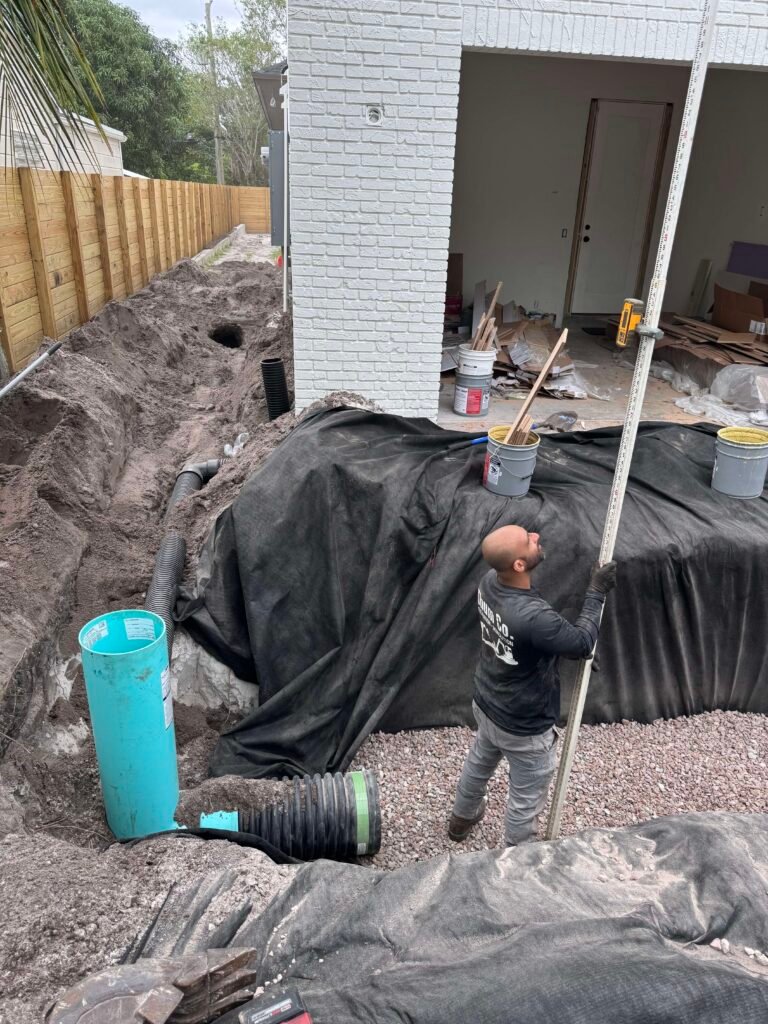
Collection: Surface drains, catch basins, or area inlets collect stormwater runoff from driveways, roofs, parking areas, and other impervious surfaces.
Conveyance: Storm pipe carries collected water to the exfiltration trench location.
Temporary Storage: The stone-filled trench provides void space that temporarily holds stormwater. Clean stone typically provides 40% void space for water storage.
Gradual Infiltration: Water stored in the stone gradually infiltrates into surrounding soil through the trench bottom and sides. Infiltration rate depends on soil permeability—sandy Palm Beach County soils generally provide good infiltration.
Overflow Protection: Systems include overflow provisions for storms exceeding design capacity, preventing flooding if infiltration can’t keep pace with inflow during extreme rainfall events.
Exfiltration Trench Design and Sizing
Exfiltration systems require engineering design accounting for:
Rainfall Intensity: South Florida design storms—typically 3-year or 5-year, 24-hour events—determine water volume systems must handle.
Drainage Area: The area contributing runoff to the system determines inflow volume. Larger drainage areas require larger exfiltration capacity.
Soil Infiltration Rate: Soil testing (percolation tests) measures how quickly water infiltrates. Sandy soils common in Palm Beach County typically infiltrate well. Clay or muck soils require larger systems or alternative approaches.
Trench Dimensions: Engineers calculate required trench volume (length × width × depth) based on storage needs and infiltration capacity.
Pipe Sizing: Perforated pipe diameter depends on conveyance requirements and system layout.
We install exfiltration systems following engineered plans prepared by civil engineers, ensuring systems meet capacity requirements and regulatory standards throughout Palm Beach County.
Exfiltration System Components
Excavated Trench: We excavate trenches to engineered dimensions, typically 3-5 feet deep and 2-4 feet wide, with lengths determined by required storage volume.
Filter Fabric: Geotextile fabric lines trench bottoms and sides, preventing soil infiltration into the stone while allowing water to pass through. Fabric also wraps the stone to prevent contamination from above.
Clean Stone: Washed aggregate (typically 1-2 inch stone) fills the trench, providing void space for water storage. Stone must be clean—free of fines that would clog the system.
Perforated Pipe: PVC or HDPE perforated pipe (typically 6-12 inch diameter) runs through the stone, distributing water throughout the trench length. Pipe perforations allow water to exit into surrounding stone.
Inlet Connections: Storm pipe from collection points connects to the exfiltration trench, delivering runoff to the system.
Overflow Structures: Overflow pipes or connections handle water volume exceeding system capacity, directing excess to secondary drainage or approved discharge points.
Inspection Ports: Vertical pipes with caps provide access for future inspection and maintenance.
New project needing an engineered retention system?
Call (561) 366-2050
for a free estimate.
Exfiltration Trench Installation Process
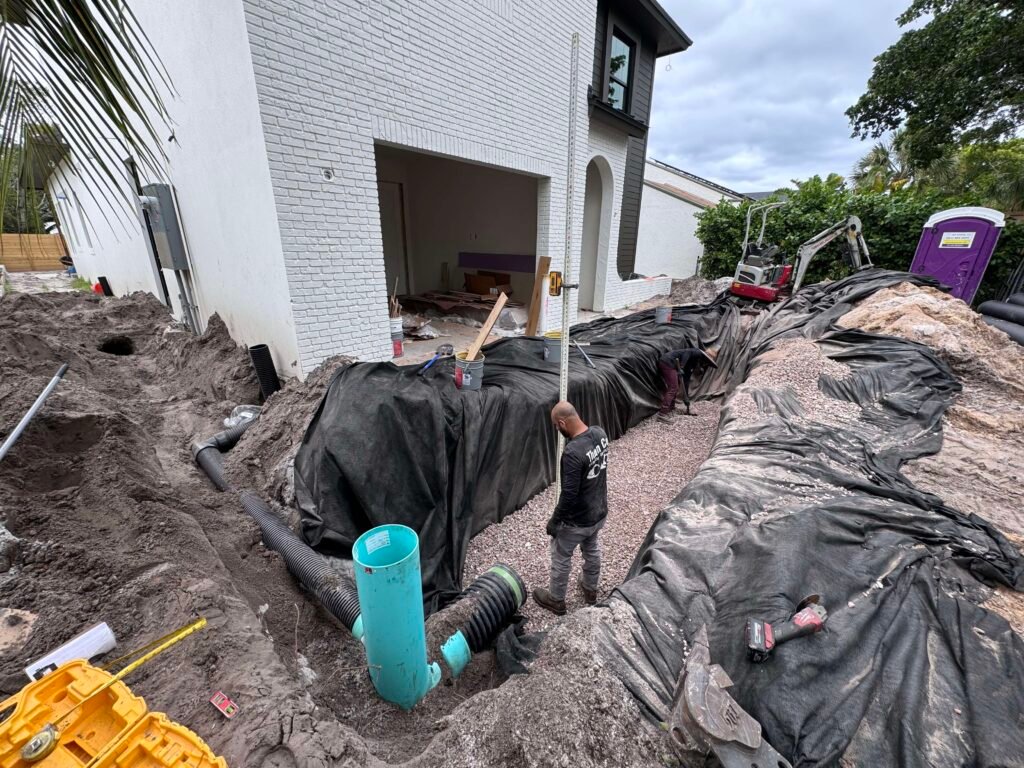
1. Site Preparation and Layout We stake trench locations per engineering plans, identify underground utilities, and prepare access for excavation equipment.
2. Trench Excavation Using excavators, we dig trenches to specified dimensions and depths. Trench bottoms are graded level or to specified slopes.
3. Fabric Installation We line trenches with filter fabric, ensuring proper overlap and complete coverage of trench surfaces.
4. Stone Placement and Pipe Installation We place initial stone layer, install perforated pipe at proper elevation, then fill around and over pipe with clean stone to specified depths.
5. Fabric Wrapping Filter fabric gets wrapped over the stone, creating a complete envelope that prevents soil contamination while allowing water infiltration.
6. Pipe Connections We connect inlet pipes delivering stormwater to the system and install overflow provisions per engineering plans.
7. Backfill and Restoration Trenches get backfilled with suitable material, compacted properly, and surface conditions restored. Inspection ports are brought to finish grade.
8. System Testing We verify connections, test system capacity when required, and ensure proper function before final approval.
Applications for Exfiltration Systems
Residential Properties: New home construction in Palm Beach County often requires on-site stormwater management. Exfiltration trenches handle roof and driveway runoff, meeting regulatory requirements while minimizing yard impact.
Commercial Development: Parking lots, building roofs, and hardscaped areas generate significant runoff requiring management. Exfiltration systems provide required stormwater capacity for commercial projects throughout South Florida.
Roadway and Infrastructure: Road construction and improvements require stormwater management for pavement runoff. Exfiltration trenches along roadways handle this while minimizing right-of-way requirements.
Retrofit Applications: Existing properties experiencing drainage problems or requiring upgrades to meet current regulations use exfiltration systems to manage stormwater on-site.
Exfiltration vs. Other Drainage Systems
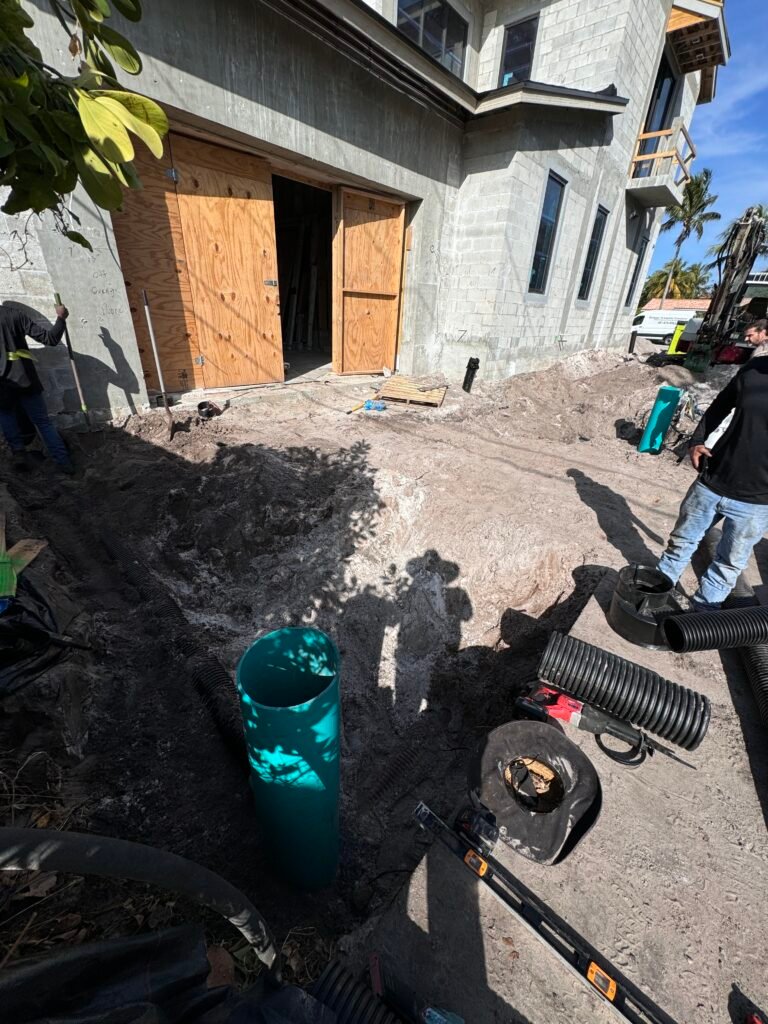
Exfiltration Trenches vs. French Drains:
- French drains manage groundwater; exfiltration manages surface stormwater
- Exfiltration requires engineered design and permitting
- Exfiltration handles larger water volumes
- Both use similar construction methods
Exfiltration vs. Retention Ponds:
- Exfiltration is underground; retention ponds are surface features
- Exfiltration infiltrates water; ponds hold and release slowly
- Exfiltration preserves usable land area
- Ponds handle larger volumes for major developments
Exfiltration vs. Storm Drain Connection:
- Exfiltration infiltrates on-site; storm drains convey off-site
- Exfiltration recharges groundwater; storm drains discharge to surface waters
- Exfiltration works where storm connections aren’t available
- Both may be combined in comprehensive systems
Maintenance and Longevity
Properly installed exfiltration systems function for decades. Key maintenance considerations:
Inlet Protection: Keeping catch basins and inlets clear prevents sediment entering the system.
Inspection: Periodic inspection through access ports verifies system condition and identifies any issues.
Sediment Management: Over time, sediment may accumulate in pipes or stone. Inspection ports allow cleaning if needed.
Filter fabric and proper installation prevent most maintenance issues. Systems designed and installed correctly provide long-term reliable stormwater management throughout Palm Beach County.
Planning an exfiltration trench install?
Call (561) 366-2050
for a free estimate.
Permits and Regulations
Exfiltration systems in Palm Beach County typically require:
- Engineering plans and calculations
- Building or site work permits
- South Florida Water Management District compliance
- Local municipality approval
We coordinate with engineers and permitting authorities, install systems per approved plans, and handle required inspections throughout the approval process.
What clients say
★★★★★ Rated 5.0 on Google
Thum Co. Contractors did an absolute amazing job on my pool demolition project in Royal Palm Beach. I couldn’t be happier. I highly recommend Aaron and his crew.
Excellent experience with Aaron and the Thum.Co team in Boynton Beach, FL. They helped us investigate and repair a sinkhole caused by a damaged underground storm drain pipe. Instead of guessing, they excavated the area, identified the exact source of the problem, and completed the repair quickly and professionally. Aaron kept us informed throughout the entire process, explained the findings clearly, and focused on solving the problem the right way. The crew was punctual, professional, and left the site in great condition. If you need drainage, excavation, underground pipe repair, or sinkhole-related work, I highly recommend Thum.Co.
Are you wanting to do a demonstration? Get ahold of Aaron, Thum Contractors. I was kinda nervous about the whole process, but after Aaron came to my house and explained what was involved, I felt very comfortable and actually excited about our project! We had pool & patio and screen enclosure demoed. The entire tear down was clean, thoughtful and timely. Jackson, Marcus and Aaron are the most polite people, ever! And communication was never an issue. I was also aware of what was happening, always. Totally satisfied with the entire process! ThankU so much!
Frequently Asked Questions
How much does exfiltration trench installation cost?
Costs vary based on trench size, depth, stone volume, and site conditions. Residential systems typically range $5,000-$15,000. Commercial systems vary widely based on required capacity. Contact us at (561) 366-2050 for a quote based on your engineered plans.
Do I need an engineer for exfiltration systems?
Yes, exfiltration systems require engineering design. Civil engineers calculate required capacity, perform soil testing, design system dimensions, and prepare plans for permit approval in Palm Beach County.
How deep are exfiltration trenches?
Typical depths range 3-5 feet, though specific depth depends on design requirements, soil conditions, and site constraints. Engineers specify depths based on infiltration needs and water table elevations.
Will exfiltration work with high water table?
Exfiltration effectiveness depends on separation between trench bottom and seasonal high water table. Engineers account for water table when designing systems. Areas with very high water tables may require alternative approaches or combined systems.
How long do exfiltration systems last?
Properly installed systems function 30+ years. Longevity depends on installation quality, inlet protection preventing sediment accumulation, and periodic inspection/maintenance.
Can exfiltration handle all property drainage?
System capacity depends on size and soil conditions. Engineers design systems for specific drainage areas and design storms. Extremely large areas or poor infiltration soils may require multiple systems or alternative approaches.
What happens during heavy storms exceeding system capacity?
Systems include overflow provisions directing excess water to secondary drainage, approved discharge points, or emergency spillways. This prevents flooding during extreme rainfall events.
Do you install exfiltration systems from engineered plans?
Yes, we work from civil engineering plans to install exfiltration systems meeting design specifications and permit requirements throughout Palm Beach County.
Related Services
Exfiltration installation often involves additional work:
- Storm Drain Installation – Complete stormwater systems
- Excavation & Site Work – Site grading and preparation
- Catch Basin Installation – Stormwater collection
Get Your Exfiltration System Estimate
Ready to install exfiltration trenches in Palm Beach County? Contact Thum Co. Contractors for professional installation from your engineered plans.
Call (561) 366-2050 for exfiltration system installation.
Thum Co. Contractors 468 Tall Pines Rd. West Palm Beach, FL 33415
Licensed building contractors providing exfiltration trench installation throughout Palm Beach County and surrounding South Florida areas since 2017.